You see stainless steel tubing everywhere, from the door handles in your house to the handrails at the mall. It does double duty by being strong enough to support weight while still looking sleek. This guide walks you through the most popular ways people use it and what you should keep in mind when picking the right type for your project.
Architectural Stainless Steel Tube Applications
Stainless steel tube is used across a wide range of building projects. It holds its structure stable, resists rust, and works with many different design styles, which is why it keeps showing up in modern construction.
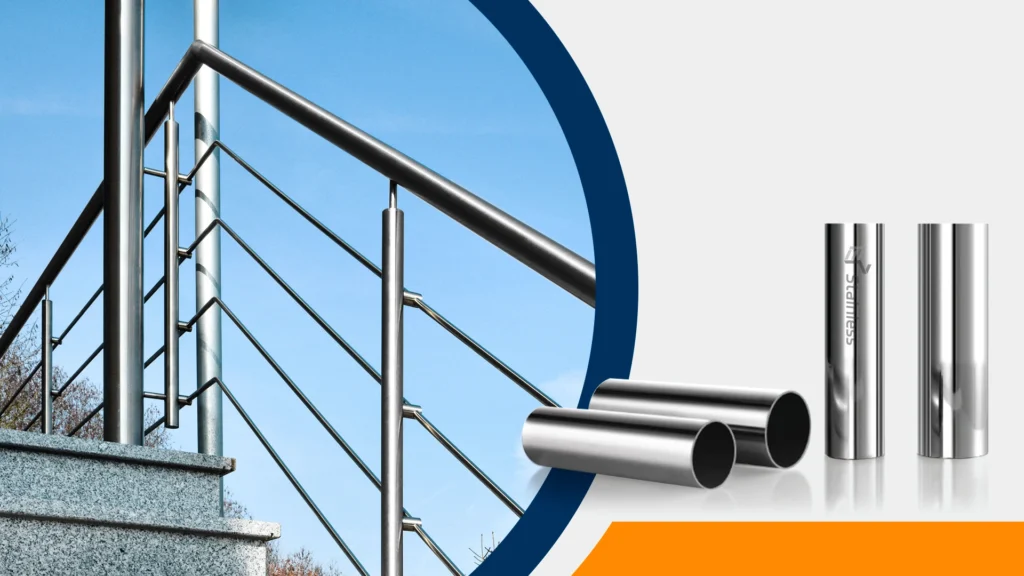
Handrails & Railings
When it comes to construction projects, stainless steel tubing is a go-to for handrails, balcony railings, and barriers along walkways. This kind of work really boils down to two main requirements: the material needs to be safe and it has to handle the elements outside.
As far as safety goes, stainless steel is incredibly tough and handles bumps and knocks without a problem. It stays rock-solid in busy areas and easily passes the load tests that most building codes demand for railings.
When you use it outdoors, you don’t have to worry about rust, even if it’s raining, humid, or salty near the coast. That makes life a lot easier because you aren’t stuck with constant maintenance or high repair bills down the road.
The finish you choose makes a big difference, too. Whether you go with a mirror polish, a brushed look, or sandblasting, the same tube can fit right into a sleek lobby, a rugged industrial stairwell, or a fancy shop. Those clean lines keep everything looking open and airy while still being strong enough to get the job done.
Door Handles
Door handles are one of the most common applications for architectural stainless steel tube. A handle in a busy building can be grabbed and pushed hundreds of times a day. Under that kind of constant use, durability is the most important thing to get right.
Stainless steel handles do not rust, fade, or work loose over time. After years of daily use, they still look and feel the same as when they were first installed. That keeps replacement and maintenance needs low.
On the cost side, stainless steel tube is generally more affordable than copper or aluminum as a raw material. The overall procurement cost is also more competitive. For projects that involve bulk orders, that difference becomes even more noticeable.
Stainless steel tube handles also work well with glass, wood, and metal doors. No special color matching or material adjustments are needed, which makes the installation process straightforward.
Staircase Systems
A staircase is one of the most visible parts of any interior space. The materials you choose do not just affect how it performs. They shape how the whole room looks and feels.
Stainless steel tube pairs well with other materials. Combined with tempered glass panels or solid wood treads, it creates a staircase that feels open and light. Compared to heavy masonry or solid steel structures, this kind of combination takes up less visual space, a look that has become common in both residential and commercial design.
For long-term performance, stairs take a lot of foot traffic. Stainless steel holds its structure stable and resists surface wear over time, which means less maintenance and fewer repairs.
The modular nature of stainless steel tube also makes installation faster and cleaner on-site, helping keep the overall project on schedule.
Stainless Steel Furniture
Beyond structural and decorative systems, stainless steel tube is widely used as the base framework for furniture. Restaurant chairs, hotel lobby seating, outdoor tables, and functional pieces in public areas often use stainless steel tube for their frames. The main reason is that it handles tough environments without much upkeep.
In spaces like commercial kitchens, bathrooms, or outdoor dining areas, the frame is exposed to moisture, grease, and cleaning chemicals on a regular basis. Stainless steel holds up in these conditions without warping, loosening, or showing visible wear.
Day-to-day cleaning is also simple. The surface does not require any special treatment, which matters in spaces that need to stay clean at all times.
In terms of design, stainless steel tube works for both simple frames and more detailed custom pieces. It fits well with modern, industrial, and light luxury interiors.
Storage Racks & Shelving Systems
For storage racks and shelving, the priorities shift toward practical performance: load capacity, hygiene, and fit within the space.
Stainless steel tube handles weight well across multiple shelf levels. It resists bending under sustained load, which makes it a reliable choice for storage rooms, kitchen prep areas, or product display shelving.
In spaces with strict hygiene standards such as commercial kitchens, medical facilities, or food processing environments, stainless steel surfaces are easy to clean and do not hold onto dirt or residue. That keeps the space up to standard with minimal effort.
Sizing and structure are also flexible. Shelf height, width, and overall frame dimensions can be adjusted to fit the actual space without being locked into a fixed product size.
How to Choose the Right Grade
In construction and interior design, the grade of material you choose has a direct impact on how long the product lasts and how it performs day to day. The ASTM A554 decorative stainless steel tubes we supply are built for architectural and structural use. They cover all the applications listed above and balance strength with visual quality.
To keep every batch consistent and traceable, we source our raw material directly from three of China’s largest steel mills: TISCO, Baosteel, and Tsingshan.
We stock the following grades to cover different environments:
| Grade | Type | Best For |
| 201 | Austenitic | Budget-friendly option for general dry indoor use |
| 304 | Austenitic | Good all-around corrosion resistance; suitable for most building and decorative applications |
| 304L | Austenitic (low carbon) | Similar to 304 with better weld performance; good for projects with welding work |
| 316 | Austenitic (molybdenum) | Stronger resistance to pitting and chloride corrosion; suited for coastal, high-humidity, or chemically demanding environments |
| 316L | Austenitic (molybdenum, low carbon) | Same corrosion resistance as 316 with better weld performance |
| 430 | Ferritic | Some corrosion resistance at lower cost; used in indoor decorative parts with low corrosion demands |
For common tube sizes and wall thickness options, we have a separate guide covering standard outer diameter ranges and sizing recommendations.
How to Choose the Right Surface Finish
Besides the material grade, the surface treatment process also affects the final visual effect and user experience. Different surface conditions not only determine the overall decorative style, but also directly affect the ease of daily cleaning and maintenance.
Polished Finishes
Polishing is one of the most common surface treatments for architectural stainless steel tube. We offer several levels based on brightness and smoothness.
Matte (#240 / #320): A soft, low-glare finish that hides fingerprints and minor scratches well. Works well in spaces that call for a quiet, understated look.
Bright (#400 / #500 / #600 / #800): As the grit number goes up, the surface gets smoother and more reflective. At #600 and #800, the finish gets close to mirror level. These are a common choice for upscale commercial spaces, display areas, and detail work where a sharp, polished look is the goal.
Brushed Finish
A brushed finish has a consistent linear texture with a clear metallic feel. It hides everyday scratches better than a mirror finish and tends to hold its look longer over time. It is a popular option in modern industrial and light luxury projects.
Custom Colors
For projects that need a specific look, we offer custom color options. Using a proven coloring process, we can apply a range of color tones to the tube surface to match the overall design palette.
Conclusion
Architectural stainless steel tube holds a strong position in modern building and interior design because it covers both structural and aesthetic requirements. Different applications have different priorities. A door handle needs wear resistance. A handrail needs to meet safety codes. A staircase needs to look open and light. Choosing the right grade and surface finish is how you get the full value out of the material over its lifespan.
Our supply chain is fully traceable, and our tubes are produced to ASTM A554 standards. If you need help with material selection or have technical questions, feel free to get in touch.